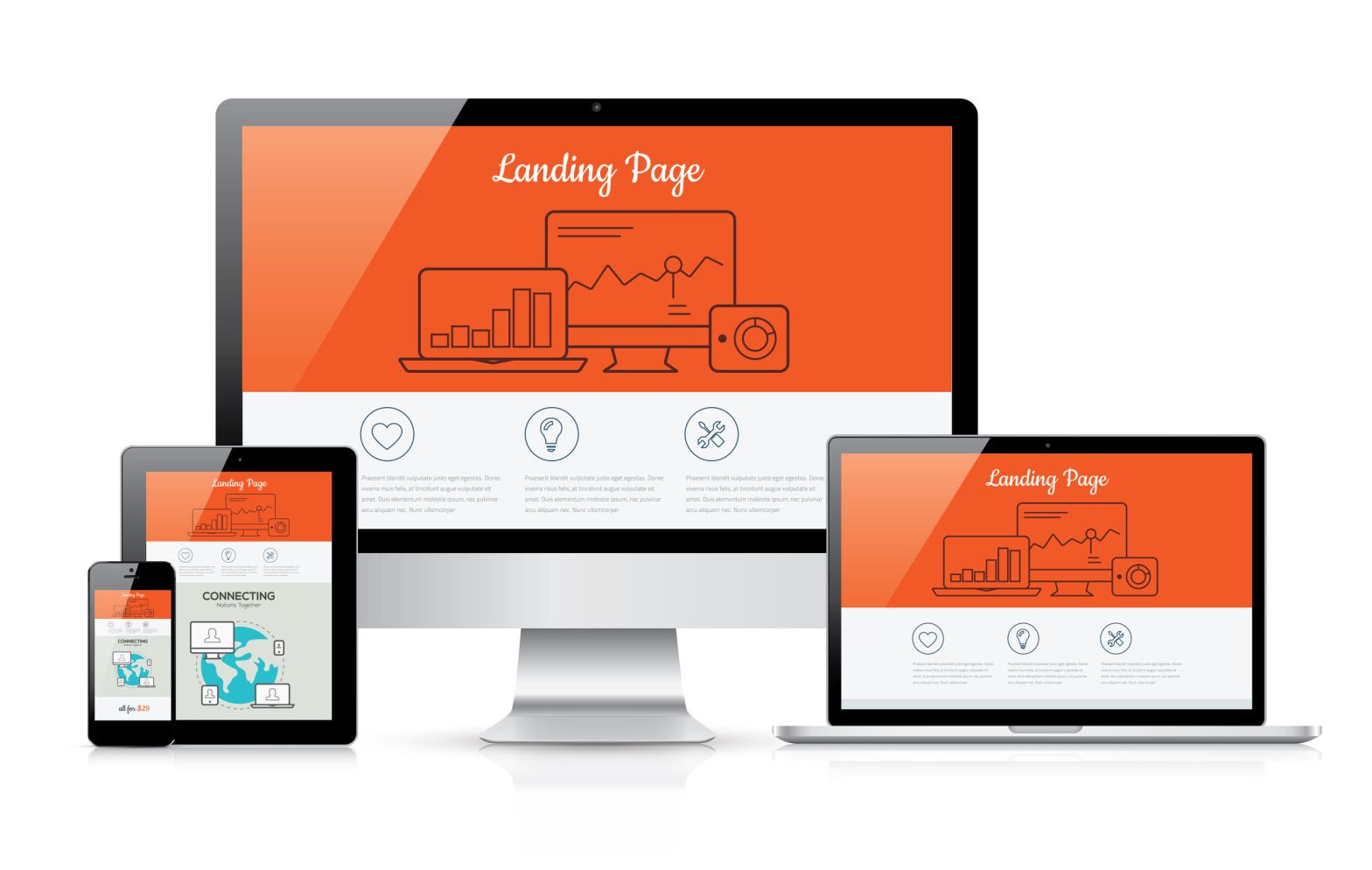
Want to build a landing page to avoid potential prospects in their leads and boost the conversion rate to an all-time high?
If so, this article is for you. To put together landing pages that carry potential leads, it is crucial to clearly understand. Ultimately, you want your landing page to make it easy for prospects to grasp your landing page’s details and convert.
When users land on your landing page, it should be clear to them what you are selling in 5 seconds or less. Most people assume that designing a good landing page is easy, but it might not be simple. It is proven that a poorly designed page will reduce the number of clicks a connection receives.
Here are eight critical landing page design activities that are sure to make your conversion rate skyrocket.
1: USE CONTEXTUAL VIDEOS AND IMAGES TO EXPLAIN YOUR OFFER
Context of use is a great way to explain your product or service to potential prospects. To view your product visually appealing to potential customers, you may provide a visual or video presentation of your product. It allows potential prospects to place themselves in the real situation of your product or service.
Your offering’s photos and videos will qualify as a good quality piece of marketing material for your company. Be sure to use videos or photographs directly rather than simply taking up space on your webpage.
2: DISPLAY PICTURES OF HAPPY PEOPLE TO MAKE YOUR PAGE WELCOMING TO VISITORS
Pictures of your friends will tell your page what kind of stuff you want. These images are the most attractive and welcoming and will make your potential prospects more comfortable on your page. A study has shown that having a photo of a smiling person on a landing page increases conversions by 102.5%! People react based on their feelings, and we can use our emotions to make potential prospects feel a certain way. Showing a smiley face puts them in a good mood, which has a positive impact on conversions.
You can go to a website that allows users to upload images or pictures, then use those images to point right at an item you want to sell. It is human nature to follow the gaze of others to their point of focus. Have the person in your picture look at the thing you want them to look at. Then, people’s attention will naturally be drawn to the focal point of your image.
The same thing is true for body language when one side of your body needs to be more prevalent than the other. If you could somehow make sure that one side is more common than the other, it would help. Using your body as a directional cue is pretty good if you want to hide what you are leading your viewers to look at gently while you fly them to a goal. However, be subtle in how you operate as an obvious pointing or gesture on the part of the person may seem annoying or unpleasant to viewers.
3: HIGHLIGHT THE MOST IMPORTANT SECTIONS OF YOUR WEBSITE WITH CONTRASTING COLORS AND SPACES.
Contrast colors are sharp variations or color changes, such as a bright orange icon on a dark blue background. Not only are we drawn to the comparison, but we are eager to understand the distinctions. You can use it in your design to highlight your page’s sections that you want to see. The header, lead capture form, and call-to-action (CTA) button should be the most important elements. It’s easier for potential prospects to digest the information on your page and convert it with contrasting colors.
One of the biggest errors that marketers make is bundling so many different things on one landing page. Space is the best thing to use to solve this dilemma. White space clusters or groupings are used strategically on your website to highlight those areas. Have a bit of space around the title, calls-to-action on the website, and other essential features to allow them space to breathe. This will give the page a very clean look and forces prospective prospects to pay attention to what matters most.
Check out this landing page for an excellent example of using contrasting colors and spaces. Here are five explanations:
- The ‘Send me more details’ call to action button is highlighted on a contrasting orange background
- Using an arrow as a directional guide
- Lead capture form displays white form fields on an orange background
- A uniform theme of orange, white, and turquoise is used throughout, but the contrast makes certain areas pop
- There is enough information on the page to make customers want to know more, but it doesn’t seem overloaded
4: DESIGN AN OBVIOUS CALL-TO-ACTION (CTA) BUTTON
Your landing page (CTA button) is essentially the most critical aspect of your site’s interactivity. Your aim is to hook up people by letting them see this button and take some action by clicking on it. Your campaign’s efficacy can be enhanced immediately by incorporating an eye-catching logo and putting it on your website’s homepage.
- Get attention to your CTA design
- Be sure to put it where people can see it.
- Time the appearance of your CTA
- Define the action to be taken through your CTA button text
- Avoid Common CTA Design Mistakes
5: CLEARLY EXPLAIN YOUR BENEFITS OR LEAD POTENTIAL RISKS ELSEWHERE
Potential prospects need to know how your product offering meets their needs. What exactly will they take away from this relationship? Present the benefits clearly and, which makes them curious to know more.
It is best to present these benefits in a list or a short blurb. It is a website that will make it easy for a site user to search through the choices available to see if this is the best choice for their needs. The landing page is a perfect example of 4 possible advantages shown together in an attractively organized way.
Try to describe the product, its features, and its advantages in a language that the user can understand. The tricky task is to give them enough information to feel educated about what you are offering, but short enough and sweet enough to be easy to understand.
6: PROVIDE POTENTIAL PROSPECTS WITH ONE ACTION TO TAKE
The goal when building your landing page is to provide potential prospects with an easy conversion path. We need to have only one action for viewers that they can take to convert. That means to delete any Navigation Bar, Footer, or Outside connection outside of our Call to Action. Since potential prospects may go to various places in an internet browser, attempting to get them to a single landing page instead of multiple places would lead to a much lower conversion rate.
Always make sure that you don’t send out too many links in a single email and if you want a higher conversion rate, give the potential lead one click to go ahead and take a look at one of those links.
7: USE BOLD HEADERS TO MAKE IT EASIER FOR PROSPECTS TO HOVER
A title and a caption are essential to your landing page design because they hook up potential leads. Marketers should, however, also try to use bold section headers on the page to clarify additional advantages or selling points. Divide the information into small, digestible segments with a cohesive topic discussed in each. With small sections and logical headers, your page will be more engaging and easier to navigate.
Near the bottom of the landing page, make sure to include a bold statement reaffirming that your product is of the highest standard. To end, this final declaration should contain a call to action. Now that’s your only opportunity to persuade the decision-maker, convince the target audience of your bid. Having an organized and easy-to-read display of information is the key to capturing leads. Your page design should be easy to navigate and understand for your conversion rate to skyrocket.
8: CREATE A SHORT LEAD CAPTURE FORM TO AVOID HIGH BOUNCE RATE
As a visitor, there is nothing more frustrating or intimidating than an overly complicated lead capture form. When designing your landing page, it is essential that filling out your lead capture form is an easy task for potential prospects. Otherwise, they will be sure to give up before they complete the conversion.
A recent study by HubSpot shows that on a website, the input area is the component that can be the most important. By making it shorter, you can increase the conversion rates. The study also revealed a strong negative correlation between drop-down menu fields and conversion rates.
The image below shows a good example of a lead capture form. Shopify only asks for three fields that are essential for creating an online store, and nothing more.
Keep your key objectives in mind when designing your signup form. Ask prospects just for the data they need to accomplish your objectives. The more potential fields you ask to fill out, the more impact you will feel.
CONCLUSION
Like any other business, the landing page (in design) is not that relevant, but as long as the design is done well, it is just as good. Potential prospects should easily read the page and understand the message you’re trying to convey.
By following these eight design best practices, your viewers will have a brief, informative, and visually appealing overview of your brand, leading to higher conversions. If you want to design a landing page and search for an expert web design and development company, contact us to help you design perfect pages for your website.
 The Modern Blogs